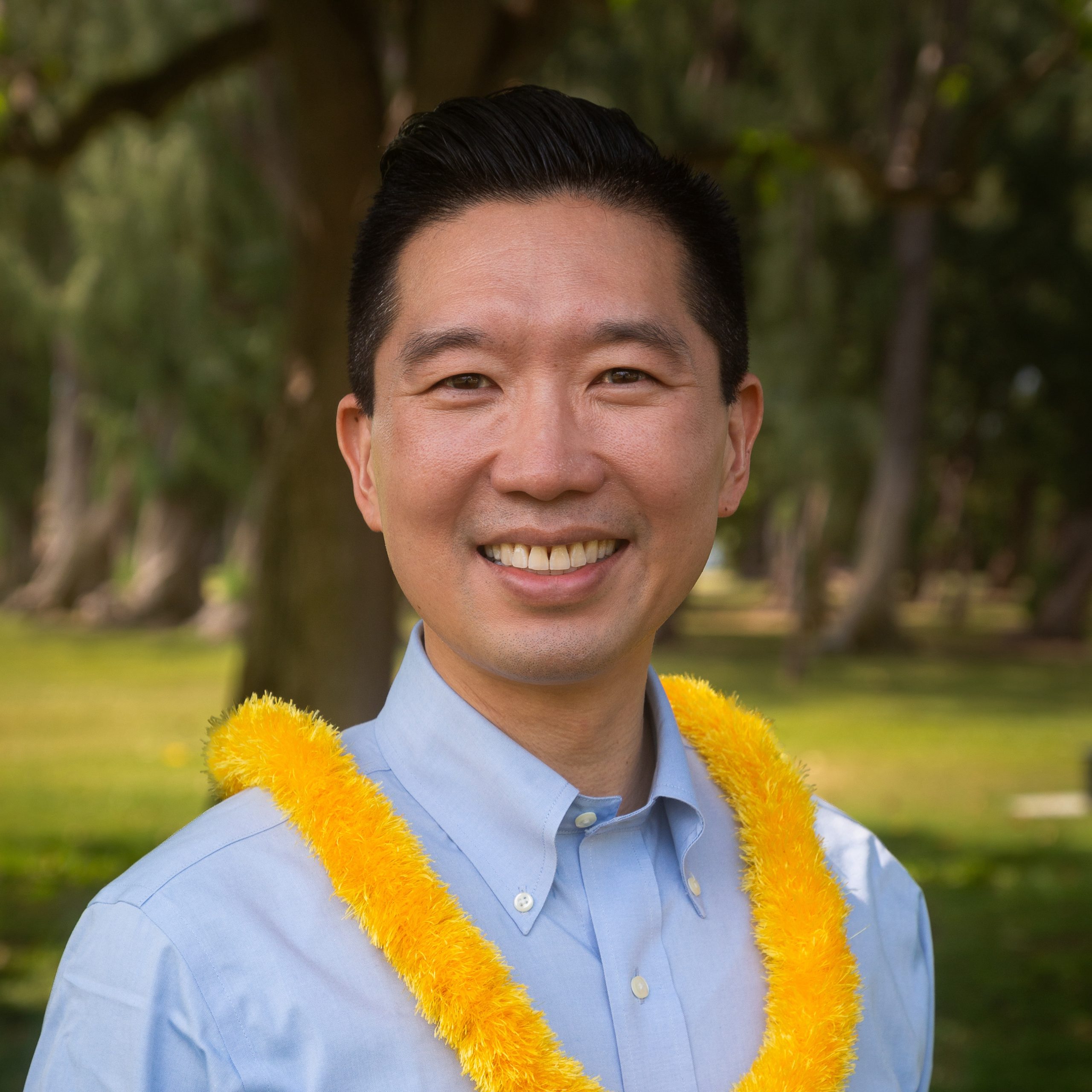
I grew up in East Honolulu, the son of immigrants from China. With one state job, as a UH professor, my father was able to put my brother and me through school, buy a house, and retire comfortably. Today, it would take 30 years of my entire salary as a state legislator to buy the same house he bought in 1983. As a result of this statewide reality, most of my high school classmates have moved to the mainland and never came back. My wife and I only became homeowners because of generous parental support. It’s no longer possible to work one job, raise a family, buy a home, and live well in Hawaii. That’s why I’m so passionate about ensuring every generation can afford to live in Hawaii.
Optimism follows results, not promises. Many local people are willing to accept a pay cut to live here in Hawaii, but if they’re never able to buy a home, it simply does not make sense for them to do so. Instead of streamlining or incentivizing private sector housing development and waiting years for imperceptible results (such as the City’s Bill 7 program or SB3202 in 2024), the state should just start building. I’ve spent years pushing ALOHA Homes, a plan to build dense, affordable, locally-owned housing on state land near rail stations, sold at cost without income restrictions or taxpayer subsidies. The first project is slated for groundbreaking next year, and its units will be about 10-20 percent cheaper than the market units in the immediate vicinity.
I’m a strong believer in the importance of economic growth. I've long supported growing Hawaii's renewable energy sector. We send over $5 billion a year out of state for imported oil, and keeping more of that money circulating here would create good jobs and reduce our cost of living at the same time. I see housing construction as an economic driver in its own right: building tens of thousands of new units, sustained over years, creates a steady pipeline of good-paying construction and trades jobs for local workers. Those new and returning residents will start businesses and eventually entire new industries that will power the economy of the future. We also have neglected tourism, the pillar of Hawaii’s economy. Rather than tearing down the Haiku Stairs, for example, we should relocate the entrance to preserve this spectacular wonder. Other opportunities for sustainable tourism abound.
Expanding apprenticeship and career pathway programs in our public schools and community colleges, and making sure students know these paths exist and pay well, are critical. I have supported bills to create programs like the Hele Imua Program and Hawaii State Youth Commission that give Hawaii youth a pipeline to work experience. I also support expanding the workforce through immigration. The DOE has had success recruiting teachers from the Philippines, for example. Hawaii is an attractive place to live and work. We just need to remove the barriers preventing people from moving here.
The only real fix is creating more supply. My ALOHA Homes plan would have the state build high-density, affordable housing on land it already owns near rail stations, sold to all Hawaii residents, regardless of income, at cost. No taxpayer subsidy is required, and no undeveloped land needs to be touched. Hawaii currently produces about 2,000 housing units a year against a need of roughly 4,000 just to keep pace with new household formation. Until we close that gap through serious production, prices will keep climbing no matter what else we do around the edges.
Under ALOHA Homes, Hawaii residents who are owner-occupants and own no other real property would be prioritized, and investors could only buy if they rent out the units full time to Hawaii residents. Out-of-state investors and speculators simply could not buy them. Other state and county housing programs have similar restrictions, and they should be prioritized over unrestricted private sector development, which will inevitably target high-margin overseas investors and vacation home owners.
The primary barrier is a lack of political will. After the Lahaina wildfire in 2024, the Governor instructed the Department of Human Services to build housing for 1,500 survivors. Despite a months-long delay due to a switch in location to a parcel with extremely challenging terrain and no infrastructure, the homes were completed and occupied within one year of the fire. If that same political will were applied to construction of high density housing on state-owned lands near rail stations, those towers could be completed very quickly. Early in his administration, the Governor promulgated Emergency Proclamations for housing. The Supreme Court recently upheld those EPs with respect to affordable housing, meaning there are virtually no legal constraints, such as zoning, on his ability to develop tens of thousands of units statewide.
By reducing housing costs, families will have more room in their budgets for other expenses, such as groceries. I support continuing to expand programs like SNAP outreach and double-up food benefit programs that stretch grocery dollars further for working families, and looking at whether state tax policy – including our general excise tax, which applies to groceries unlike sales taxes in most states — is making food more expensive than it needs to be. The transition to 100 percent renewable energy will help stabilize energy costs for families who are currently subject to the skyrocketing price of oil in the wake of Trump’s war in Iran.
Childcare costs of $24,000 or more per year for infant care are simply impossible for most working families, and they push many parents, mostly mothers, out of the workforce entirely. I support expanding state investment in childcare subsidies and increasing the supply of licensed childcare slots, particularly through partnerships with our public schools, which already have space and infrastructure in communities across the state. New Mexico recently announced free childcare for all families in the state, paid for by its sovereign wealth fund. Hawaii could establish such a fund, which will grow over time and eventually have the capacity to pay for child care and other necessary services for local families.
I would reduce the State’s dependence on taxes. Currently, Hawaii relies primarily on the excise tax and the income tax to pay for state services. Both are tied to wages, which historically have grown at a slower rate than the value of the stock market. If we set aside certain funds into a sovereign wealth fund, such as the $120 million per year in Green Fee revenues, the $700 million Plavix settlement, or other one time collections, and invested those funds into the markets, over time the state would be able to pay for additional public services. For example, Alaska gives free money to every resident from its sovereign wealth fund, and New Mexico pays for universal free childcare for every family from its fund. Singapore and Hong Kong’s sovereign wealth funds have enabled those jurisdictions to offer outstanding public services, like public housing and mass transit, despite their low tax rates and business-friendly economic policies.
Hawaii’s high cost of business stems from Baumol’s cost disease. High wages, high rents, and high costs of imported goods are all components. I believe the same policies that will alleviate the cost of living for residents will do so for businesses, including reducing energy costs by switching to renewable energy, streamlining permitting, and lowering housing costs. Additionally, by reducing these costs to residents, they will have more to spend on discretionary purchases, benefitting the broader economy.
I believe the single best way to improve transparency, accountability, predictability, and public participation in state government is through a year-round, continuous legislative session instead of our current January to May session. That way, the Legislature can abide by the Sunshine Law’s six day notice of hearings (instead of the current 48 hour notice), giving greater opportunity for the public to submit testimony. It would also eliminate the chaotic and swampy conference process, which empowers a handful of powerful legislators to kill good bills with no explanation or accountability. Most importantly, it would afford legislators the time to seriously investigate issues and craft thoughtful, nuanced solutions.