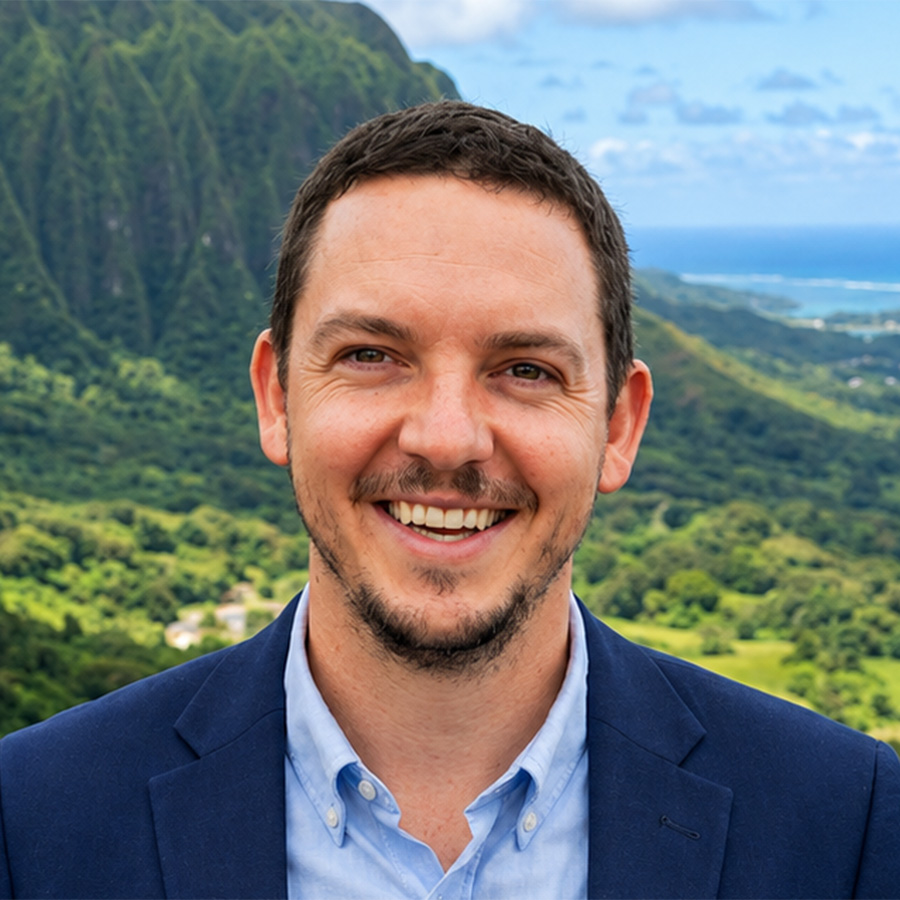
Jordan K. Nakamura
Office: Senate District 13
Party: Democrat
My parents never could afford their own place and I've lived with them and my grandparents, ever since my birth until leaving for college, in a multigenerational household. I remain there to this day because its the only option we have to afford to live in Hawai'i, and my grandparents continue to share a roof with us. I moved away for college under the pretense that Hawai'i was not affordable and I'd need to find a way to make money elsewhere in order to be able to save. Despite the services I required for assistance, aid is incredibly difficult to obtain here. I have never gotten approved for SNAP benefits exclusively due to punitive technicalities like missing a phone call for certification while I was showering or driving on the road. Since moving back, I have only experienced pay cuts and jobs with lower wages comparable to similar roles offered in California. I've also experienced the bus fares, groceries, gas prices, and utility prices all increase at bank breaking rates.
Hawai'i doesn't need to be seen as a desert of opportunity when with some focus and help from the State, it can inversely be a forerunner in multiple industries. Potentially higher wage sectors like renewable energy, technology, agroforestry, oceanology, film and media, and ecotourism are the basis for an entirely new horizon of Hawai'i economics. Energy and agroforestry are sectors which most of the world will likely need to begin engaging in to survive the coming years, and if Hawai'i prioritizes its own pressing needs now as an island, it can look ahead to a future where it is the seasoned veteran of championing these fields of work and study in a world that will increasingly need these kinds of jobs and skills related to sustainability and care. The film industry is growing here, while it dwindles in places like Los Angeles. We need to create more state incentives for the support and job creation within these sectors as an investment in our future as leaders in these fields. We can provide subsidized housing, scholarships, and public salary matching for kama'aina who are facing low wages and high costs.
Besides diversifying higher wage sectors, we need to implement a scalable inflation-based increase of the minimum wage after it's set to hit $18 an hour in 2028. Our opportunity is related to people feeling like there are jobs that pay well and allow for most of the population to have enough needs met that they can actually afford to regularly contribute to the growth of a local economy. We need to make sure people are well compensated for being a resident of Hawai'i through the funding of mixed use social housing which provides stable housing for more locals as well as jobs for the creation and maintenance of this entire field of properly maintained local communities.
The state can invest in programs designed to prepare and establish young people for work. I led a program that was designed to help local students be prepared to fill jobs in conservation and agriculture. These are much needed sectors which also traditionally have a high percentage of out-of-state hires who often move away. Federal cuts dissolved this popular program, however the state can prioritize keeping local students home and in what they understand are thriving careers. The state can provide financial aid provisions, like if you make less than a certain income threshold, you qualify for free higher education or trade school. The state can also focus resource development in programs like Work Hawaii which helps subsidize local workers for training and competitive salaries.
An immediate action is to propose a bill that closes the tax loophole currently available to REITs. We can also tax non-owner occupied luxury second properties, as well as corporations' assets. There was also a conveyance tax bill that would dedicate its earnings to a revolving housing fund and DHHL that died with almost no opposition last session. The funding that comes in from taxing these entities fairly could be dedicated to housing affordability initiatives.
Maui's Bill 9 has been incredibly successful at prioritizing housing for Maui residents and since its passage, many out of state property owners sold their housing at far below their purchase price, allowing for residents in dire need and low funds to acquire some of the land that was previously bought out from under them. Given its success, the model should get consideration for legislation that expands its basic tenets into a more statewide application. We can pass legislation for Right of First Refusal to disincentivize high turnover and unfair price hikes on rent.
I'd support projects like Senator Stanley Chang's Aloha Homes, which is essentially like DHHL but for local people who aren't necessarily of Hawaiian blood. I'd support proper infrastructure, buy-in, adequate green and social spaces, community consent and input initiatives for the state's reconstruction of outdated PHAs which ultimately will lead to 11,000 new actually affordable housing units.
Most immediately we can remove the GE tax from groceries, as well as for other necessities like medicine, medical care, tampons, and diapers. We can also invest in more local agriculture and locally run food hubs so reliance on imported goods drops, as well as needing to buy groceries that basically come with a shipping and handling overhead cost passed to the consumer.
I believe the State can propose to start a free childcare fund just like New Mexico's model, and while we allow the fund to build, we can start training the staff for this project by piloting the fund to servicing certain qualified high need constituents, and with them trainees can gain experience providing care to real community members. We should work to pass the bill ensuring free school meals for every keiki. New markets proposed for Hawai'i should have some revenue explicitly allocated for education.
I believe imposing a wealth tax on corporate assets and using that money to fund housing/rent subsidies and the implementation of social housing and infrastructure would be getting us much closer to tax fairness in Hawai'i and drastically improve retention and affordability.
We have created an economy that essentially is controlled by a small handful of legacy corporations. These corporations are allowed to carve up sections of our islands from afar and develop housing nobody can afford to deprive once thriving local business areas like Kaka'ako and Ward to be completely devoid of local involvement. We need a competitive economy that works for small businesses and everyday people, instead of the current state of affairs which has been shaped by the corporate entities in power and their influence on our legislature. The state in the meantime can provide low interest rate loans to small businesses, and subsidize retail spaces for small businesses which feature prime locations and low rent. We should also be sure to invest in agencies dedicated to the expansion and maintenance of the health of economic diversification sectors, like ocean tech.
We need to continue to remove the corporate influence in our politics and return power into the hands of the people. I propose more public funded elections measures be passed to fast track us to a world where informed voters' choices and candidates' ideas determine a race versus any candidates' proximity to money and moneyed connections. We need to strengthen, refine, and expand the Sunshine Law, as well as improve the efficacy and powers of enforcement of the Ethics Commission. We should consider joining the 43 other states that get to elect their independently elected and acting Attorney General instead of allowing that appointment to fall solely in the hands of the Governor.
Related Candidates

Lei Ahu Isa
No Response Received,Senate District 13
Democrat
Wallyn Kanoelani Christian
No Response Received,Senate District 13
Republican
Tricia Kwai Lin Nakamatsu
No Response Received,Senate District 13
Democrat