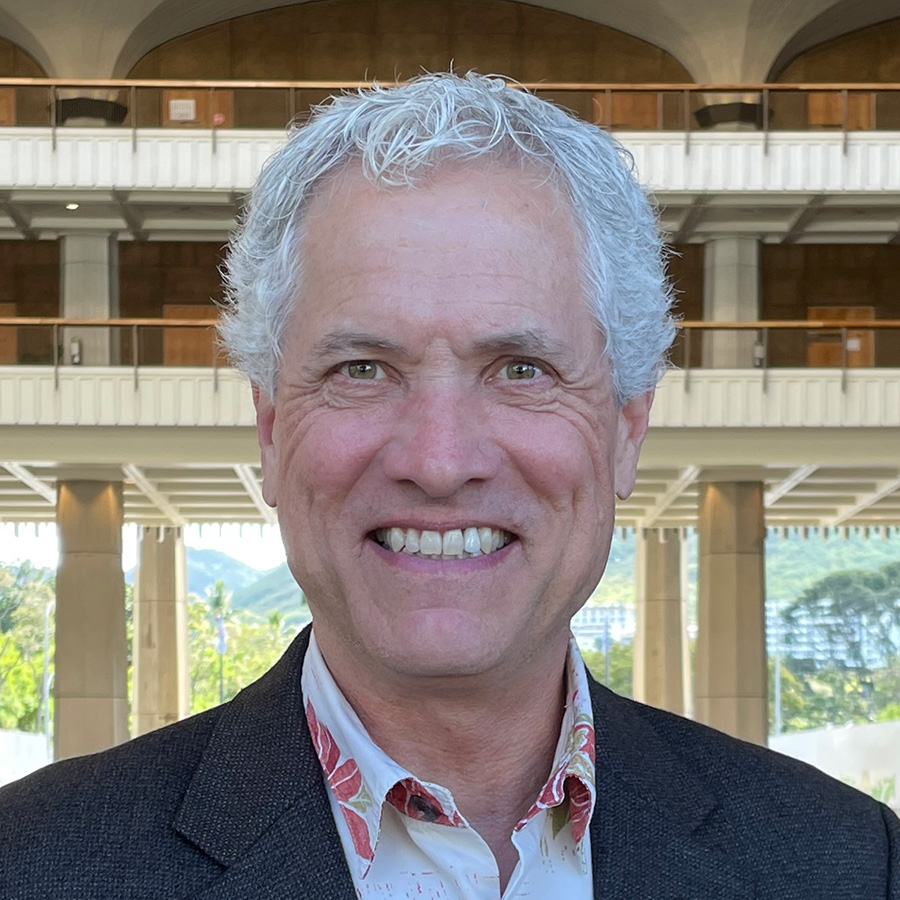
I have personally experienced the challenges of providing for my family's needs of food, housing, healthcare, and other necessities. My wife and I both work full time and live simply, sometimes depending on family to help out when things got tough.
The legislature has taken some steps to help address this, including providing income tax relief to Hawaii's working families (SB 3125 CD1), providing annual salary step increases to public school teachers (HB 1890 CD1), investing $250 million in affordable housing development (HB 1800 CD1), and giving incentives for affordable housing projects that include deed restrictions prioritizing Hawaii residents. I pledge to continue this work in future sessions.
I will continue to support the incremental increases in minimum wage that the legislature approved a couple years ago. I will also continue to support economic diversification programs and expansion of Career and Technical Education programs at our public high schools and community colleges.
I will continue to support economic diversification programs such as expanding the film tax credit (SB 2580 CD1), expanding the types of businesses which qualify for benefits in the Enterprise Zone Program (SB 2360 CD1), and promoting the expansion of other economic sectors to diversify our economy, such as ocean science and technology (SB 2907 CD1).
I will continue the work done by the legislature this past session to address this issue, including appropriating more funds for affordable housing development ($250 million in HB 1800 CD1), authorizing the counties to issue bonds to finance infrastructure for affordable housing projects (SB 3219 CD1), and clarifying allowable uses within agricultural districts with respect to farm dwellings and farm employee housing (HB1737 CD1). I will also support additional recommendations from other representatives who are more knowledgeable in this area, such as the Chair of the Housing Committee in the House.
I will continue to support innovative bills proposed to address this situation, such as HB 1740 CD1 which provides incentives for affordable housing projects that have deed restrictions to prioritize Hawaii residents over out-of-state residents and speculative buyers.
I will continue the work done by the legislature this past session to address this issue, including appropriating more funds for affordable housing development ($250 million in HB 1800 CD1), authorizing the counties to issue bonds to finance infrastructure for affordable housing projects (SB 3219 CD1), clarifying allowable uses within agricultural districts with respect to farm dwellings and farm employee housing (HB1737 CD1), and providing incentives for affordable housing projects that have deed restrictions to prioritize Hawaii residents over out-of-state residents and speculative buyers (HB 1740 CD1). I will also support additional recommendations from other representatives who are more knowledgeable in this area, such as the Chair of the Committee on Housing.
I will continue to support innovative legislative proposals to expand agricultural production and agricultural processing in the State, and subsidize the cost of interisland shipping of agricultural products.
I will continue to support the appropriation of funds to develop more early childhood education programs and facilities, such as the $20 million appropriated in the 2026 session in HB 1800 CD1. I will also continue to support sufficient legislative appropriations to the public school system to provide high quality education at no cost to Hawaii residents.
I strongly support SB 3125 CD1 which changes the tax system to provide additional tax relief to Hawaii's working families. I will continue to support these tax cuts in future sessions.
The primary complaint I hear from businesses is that Hawaii has too many regulatory barriers. To address this, I support bills proposed by the collaborative effort facilitated by the House Economic Development Committee called the SPEED Task Force, which stands for "Simplifying Permitting for Enhanced Economic Development."
In the four years I have served as Chair of the House Judiciary and Hawaiian Affairs Committee, I have taken the lead to pass major legislation to improve transparency, accountability, trust, efficiency, and public confidence in state government. Passing these bills has helped to improve public confidence in our State government. This includes passing bills that strengthen our statutes to prevent public corruption, improve campaign finance disclosures, prohibit lobbyist contributions to legislators during session, prohibit state agency directors from campaign fundraising, and limit corporations from making campaign contributions. Next, the legislature needs to pass a bill to prohibit government contractors from giving campaign contributions to government elected officials who can determine who gets those contracts.