Kekoa O Pololū Kealoha
Office: House District 30
Party: Democrat
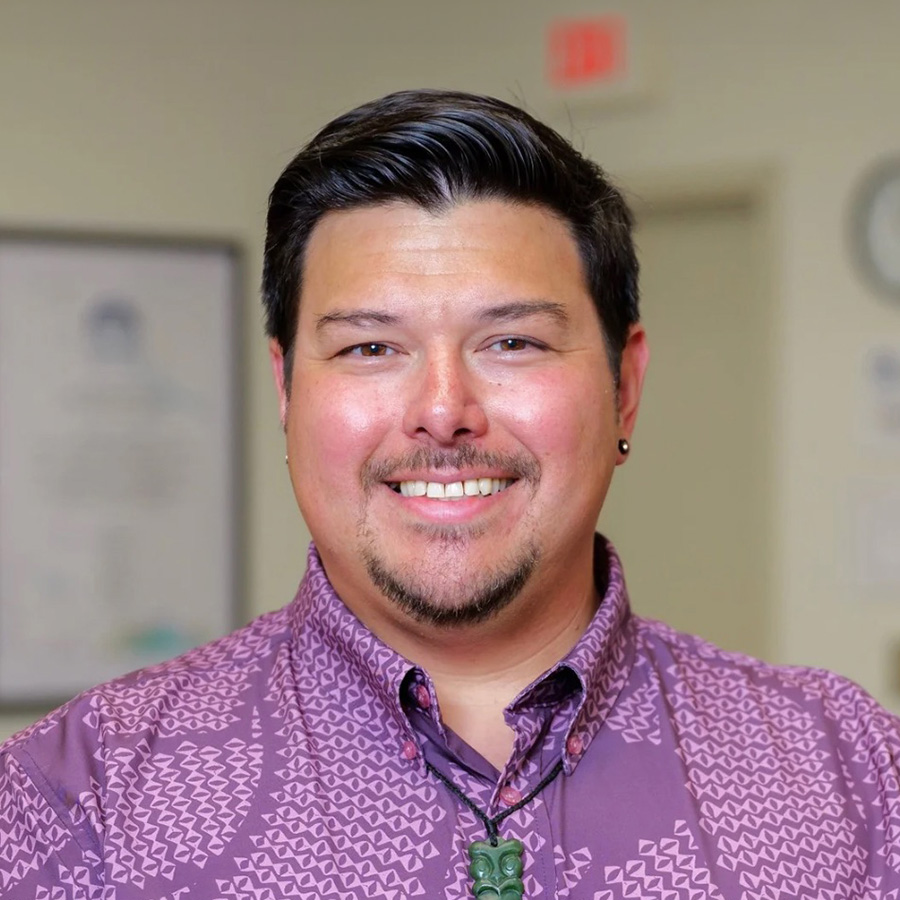
I have experienced Hawaiʻi’s high cost of living from multiple perspectives. I currently work in the nonprofit sector because I believe in service, not because it is the path to financial security. Before working in nonprofit public health and direct services, I worked in restaurants and retail, often holding two jobs at the same time. In fact, I was working two jobs as recently as last year, and I still take on side work to help make ends meet. Like many local families, I understand firsthand the constant balancing act of paying bills while trying to build a future in Hawaiʻi.
Professionally, I also work with people experiencing low incomes and complex medical needs. Every day, I help individuals overcome financial and systemic barriers to access healthcare and improve their quality of life. Those experiences have shown me how affordability affects every aspect of a person's well-being.
Today, I also help develop public policy with those realities in mind. My goal is to reduce unnecessary barriers, strengthen the systems people rely on, and ensure government becomes part of the solution rather than another obstacle. My understanding of Hawaiʻi's affordability crisis comes not only from my own experience, but from walking alongside the people most affected by it.
For me, this conversation begins with the fact that so many Native Hawaiians now live outside of Hawaiʻi. As a people whose culture and identity are deeply rooted in our relationship with the ʻāina, the reality that so many have had to leave is heartbreaking. More broadly, too many kamaʻāina families with generations of history in Hawaiʻi feel they have no choice but to build their lives elsewhere.
Restoring optimism starts with leadership. We need leaders who consistently acknowledge this challenge and make reversing out-migration a central consideration in policymaking. Every major decision should be viewed through the lens of whether it makes Hawaiʻi more livable and more attainable for local families. We should also be learning more about the types of opportunities that are pulling our people away beyond cost of living. Perhaps there's a way to diversify our way of life that is rooted in Hawaiʻi but allows us to live more cohesively in a modern world.
We also need to shift the conversation. We spend a great deal of time talking about why people are leaving, but not enough time asking what it will take to bring them home. We should be creating the conditions that allow local working families, young professionals, and former residents to envision a future here. Our goal should not simply be slowing the loss of our people—it should be rebuilding communities where those with deep roots in Hawaiʻi can once again afford to live, work, raise families, and thrive.
Addressing lagging opportunity and low wages requires looking beyond any single policy. One priority is ensuring the State pays the true cost of contracted services. Too often, nonprofit and community partners are expected to do more with less, which suppresses wages and strains the organizations delivering essential services.
The State should also lead by example. As Hawaiʻi's largest employer, it has a responsibility to provide wages that reflect the true cost of living and the value of the work provided.
We also need to create an environment where small businesses can succeed. That means reducing unnecessary bureaucracy, streamlining administrative requirements, and exploring targeted support that helps local businesses grow, hire, and innovate instead of spending their time navigating red tape.
Finally, opportunity depends on strengthening the foundations that allow people to succeed. Quality public education, accessible healthcare, safe and affordable neighborhoods, strong social support, and economic opportunity are all interconnected. If one pillar is weak, the entire foundation becomes unstable. Lasting economic growth requires investing in all of them so local families have the opportunity not just to earn a living, but to build a future in Hawaiʻi.
Workforce development begins with education. I believe public education is one of the greatest drivers of opportunity, and every student should graduate with a clear pathway to a meaningful career. Whether that pathway is college, an apprenticeship, or a skilled trade, our schools should help students discover their strengths and connect them with real opportunities.
We should strengthen career and technical education, expand partnerships with employers, unions, and higher education, and increase opportunities for internships, apprenticeships, and work-based learning while students are still in school. These experiences help young people build skills, confidence, and professional networks before they graduate.
For students pursuing higher education, cost should never be the barrier that prevents them from reaching careers that require additional credentials. We should continue investing in affordable pathways through our community colleges and universities while aligning programs with Hawaiʻi's workforce needs.
Most importantly, we should prepare students not just for any job, but for careers that allow them to build a life here in Hawaiʻi. Workforce development should be tied to economic development so we are creating living-wage jobs alongside a workforce prepared to fill them. When we invest in our young people, local businesses, and emerging industries together, we create an economy where our graduates can choose to stay, thrive, and raise families in the communities they call home.
Lowering housing costs requires more than one program. I would explore a tiered approach that continues using Area Median Income when federal funding requires it, while creating Hawaiʻi-funded housing models with standards based on what local workers actually earn and can afford.
Hawaiʻi already operates public housing through the Hawaiʻi Public Housing Authority, which manages more than 6,000 units across federal and state properties. I would examine how we can responsibly expand state-owned, mixed-income housing—especially on public land—so affordability is preserved long term instead of expiring after a developer’s required period.
We should also increase infrastructure funding to reduce construction costs, streamline permitting without weakening safety or community input, preserve existing affordable rentals, and expand shared-equity and first-time homebuyer programs. State-supported projects should include clear tiers for very-low-income households, working families, and moderate-income residents, with strong owner-occupancy and anti-speculation requirements.
My broader goal is greater local control. Federal resources remain important, but Hawaiʻi should invest more of its own money so our housing policy is not entirely dependent on changing federal priorities. Public investment should create permanently affordable homes and ensure that the people who work in our communities can afford to remain in them.
Housing supported by public investment should first serve the people who live, work, and contribute to Hawaiʻi's communities. I believe local working families and kamaʻāina with deep roots in these islands should be prioritized over speculative investment.
Hawaiʻi already uses tools such as residency requirements, owner-occupancy requirements, and shared-equity provisions in some affordable housing programs. I would support expanding and strengthening these approaches so publicly supported homes remain available to local residents instead of becoming investment opportunities.
I would also explore stronger eligibility standards for state-supported housing, including reasonable residency requirements where legally permissible, long-term owner occupancy, and resale protections that preserve affordability for future generations. Public investment should create lasting community benefit, not short-term financial gain.
At the same time, we must continue building more housing across a range of income levels. Increasing supply and protecting affordable homes are complementary strategies. My goal is to ensure that the teachers, healthcare workers, tradespeople, nonprofit employees, and other local residents who keep Hawaiʻi running have a fair opportunity to own a home and build their future here.
This question is incomplete, because housing availability isn't the only thing pricing families out of Hawaii. The cost of groceries, gas, and health care are pushing people out too, and any solution has to account for that.
That said, the state is taking steps to build more housing: fast-tracking permitting, building on state land, and pursuing public-private partnerships. I support all of that and I would be in favor of strengthening those strategies and even expanding them. But I also want us to move carefully, not just quickly. Public-private partnerships require real oversight, and we're currently dealing with an audit tied to mismanaged housing expenditure funds. We can't afford to repeat that.
Building more homes matters, but so does making sure the money and processes behind it are accountable. Speed without safeguards just sets us up for the next audit.
Grocery costs in Hawaii are rooted in our dependence on imported food and the shipping costs that come with it. We can't have a serious conversation about lowering grocery prices without addressing that dependence. I want to expand local agriculture and support the farmers and local businesses who can grow our food supply here at home.
I also support expanding the existing tax credit for low-income families and I believe we should reduce, and potentially eliminate, the GET on groceries. Sales taxes like the GET are inherently regressive: they hit working-class and low-income families the hardest, while barely registering for people making millions a year. That imbalance is something the state legislature needs to take seriously. Likewise, higher wages would reduce the burden of grocery costs as well. (I wrote about systemic solutions to this previously in the survey.)
I believe the state should support the cost of preschool and childcare the same way it already invests in early education. I fully support universal childcare, and I think it should be a priority. Some people push back on universal programs, arguing folks should cover their own costs. But universal childcare lets parents get back to work, return to school, or get some rest, benefiting the whole community, not just one family. Quality universal childcare also promotes positive social support development among children, parents, and care providers. Strong support networks are crucial to a thriving community, so creating these opportunities for our communities to thrive is essential.
Additionally, saved costs on childcare increase families' spending power and overall quality of life. Policy that reflects our shared humanity is something I absolutely value.
I would increase taxes on the ultrawealthy to support the costs of progressive policies that offer relief and support to our lower-income residents.
I don't think Hawai'i is, or should be, the right place for every kind of business. Businesses that deplete our resources or encroach on land significant to Hawaiians or Kamaʻāina shouldn't find it easy or comfortable to operate here. Geography plays a role too. Even remote work is hard to coordinate given the time zone gap with the mainland.
That said, for the businesses that do belong here, the state's bureaucracy is a real obstacle. It's notoriously slow and difficult to navigate. We need to overhaul how the state communicates with business owners and how it facilitates business development from the start.
Targeted support for local businesses is a strong place to begin: subsidies, relief programs, and other initiatives that make it easier for local businesses specifically to start and grow. Supporting the businesses that are actually right for Hawaiʻi should be the priority.
This past year, a lawsuit was filed against the state House of Representatives for holding a meeting behind closed doors, a clear violation of the Sunshine Law. That case is a good starting point: we need regular accountability from government watchdogs to keep the legislative process genuinely transparent.
Beyond enforcing the Sunshine Law, I want a clearer, more public legislative process, one where people can actually follow how a bill moves from proposal to vote. Right now, that process feels deliberately opaque, as if it's designed to be accessible only to people who already know how to navigate it. Making that process legible to ordinary constituents, not just insiders, is where I'd start.
I also want more clarity on how and why certain bills get held up. As it stands, committee chairs have significant power which promotes the whole "you scratch my back I scratch yours" mentality. It promotes a culture wherein certain groups coalesce around certain shared goals to advance agendas. THAT is what constituents are upset with. They see the hypocrisy. They may not be able to articulate it all the time, but they can feel it in their naʻau.
Related Candidates

Faatea S. Faatea
House District 30,No Response Received
Democrat
Shirley Ann Templo
House District 30,No Response Received
Democrat
Amanda Ybanez
House District 30,No Response Received
Republican
Angela Melody Young
House District 30,No Response Received
Republican