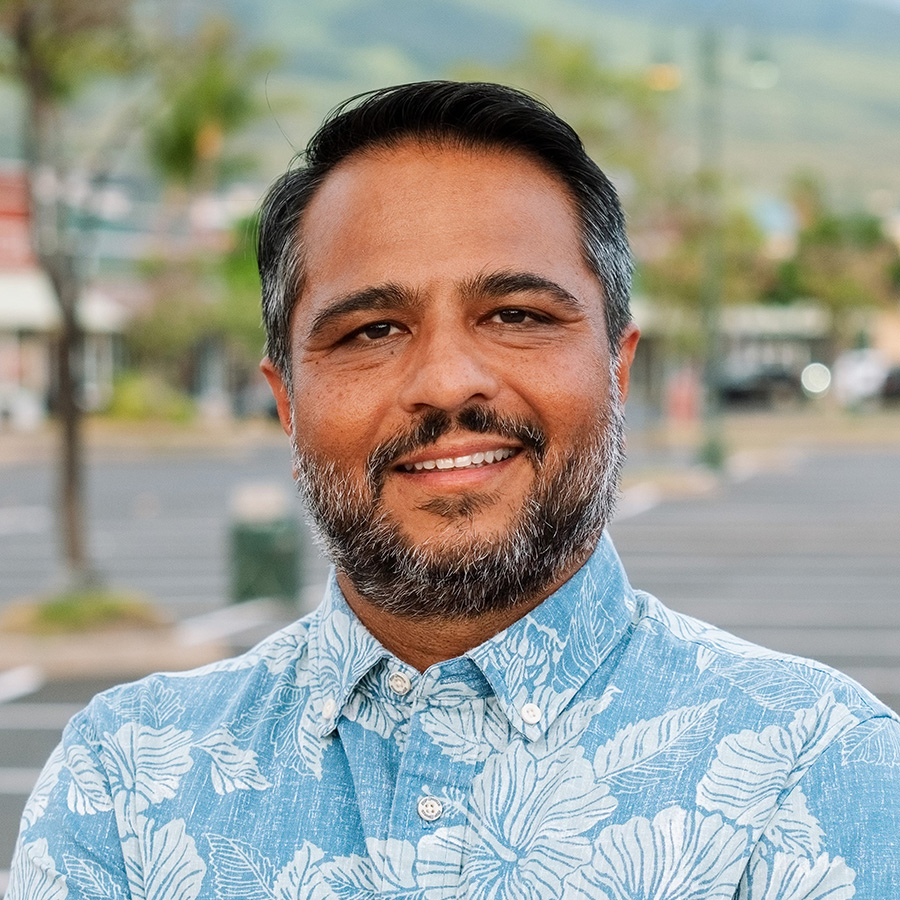
Ashley Olson
Office: House District 14
Party: Democrat

The high cost of living in Hawai`i is something I've lived. As a public school teacher, I've worked second jobs throughout my career, including in retail, food service, and as a theater usher, to make ends meet. Even near the top of the teacher pay scale, I still qualified for affordable workforce housing, which says a great deal about how expensive it is to live here.
I also see the impact every day in my classroom. More than half of Maui's public school students, and at nearly half of our schools, qualify for free or reduced-price meals. If those income eligibility limits reflected Hawaii's true cost of living, I believe that number would be even higher. Recent federal funding decisions are also likely to make these challenges worse for working families.
The first step is addressing the root causes of Hawaii's high cost of living. We need to expand affordable housing and create realistic pathways to homeownership so local families can build their futures here. We also have to reduce our dependence on imported goods and fossil fuels.
Improving broadband infrastructure and modernizing policies around remote work will open up job opportunities that will allow locals to make a life here. At the same time, we should support entrepreneurship and strengthen our workforce by expanding career and technical education, apprenticeships, and paid internships that prepare students to move directly into good-paying local careers.
Finally, we need to take a hard look at whether critical infrastructure like water and electric utilities should remain in private hands when affordability and reliability are at stake. Investing in renewable energy, affordable childcare, and accessible health care will help lower the cost of living and make it possible for working families and young professionals to build their futures in Hawai`i. These are all things that need to be done in order to make it possible for locals to stay here and build a life.
Hawai`i isn’t going to see sustained wage growth unless we create an environment where local businesses can thrive. Too many of our laws and regulations make it difficult for entrepreneurs to start and grow successful businesses. As a result, many of our largest employers are headquartered elsewhere, with a commitment to shareholders rather than to Hawaii's communities.
I will work with local business owners who have a proven commitment to Hawai’i, learning from them what gets in the way of starting, growing, and hiring. Then we can revise the laws and regulations that create unnecessary roadblocks while still protecting consumers, workers, and our environment.. We can make it easier to do business without sacrificing important consumer, worker, or environmental protections. By supporting local businesses, encouraging innovation, and helping entrepreneurs succeed, we can create more high-quality jobs, raise wages, and build an economy that keeps more wealth here in Hawai`i.
It starts with education and access. We should expand University of Hawai`i dual-credit and early college programs so more students graduate from high school with both a diploma and a two-year degree or industry-recognized credentials. We also need to increase apprenticeship opportunities for students who want to enter the skilled trades, creating straightforward pathways to careers that pay well and don’t require a four-year degree.
We also need to expand job training and continuing education for adults already in the workforce. To make these opportunities available statewide, we must improve reliable broadband internet and expand distance learning so people on every island have equal access to education and training - and not just in urban areas.
At the same time, we need to diversify Hawaii's economy. Our workforce is concentrated in service industries, leaving many workers with limited opportunities for wage growth. By expanding broadband access and modernizing laws that make it easier for out-of-state employers to hire Hawai`i residents for remote positions, we can connect local workers to higher-paying jobs without forcing them to leave the islands. Keeping that income here will strengthen our local economy while giving young people a real reason to build their futures in Hawai`i.
Nearly three years after the Lahaina fire, fewer than a quarter of the homes that were lost have been rebuilt, while construction costs continue to rise. Too many local families are struggling to find stable, affordable housing in Lahaina and around the state.
We need policies that make long-term housing for local residents a better investment than short-term rentals. I will work with my fellow legislators to create incentives, such as General Excise Tax (GET) exemptions or state income tax credits, for landlords who commit to multi-year leases with local families at or below Area Median Income (AMI) thresholds.
Homeowners insurance is another area where costs have increased rapidly and adds a significant burden to the cost of homeownership. It remains to be seen if SB 1044, recently signed into law by Governor Green, will have the intended effect of stabilizing and reducing insurance costs over the long term.
We need to make sure housing is built first and foremost for the people who live and work in Hawai`i and not for speculative investors or buyers looking for a second or third home. Affordable and workforce housing projects should include strict residency requirements.
We should also look closely at efforts in places like New York and Kaua`i to limit the ability of private equity firms and other large institutional investors to purchase single-family homes. If those approaches prove successful, they could provide a model for protecting Hawaii's housing market from speculation.
Finally, our tax policies should discourage speculative ownership while encouraging owner-occupancy. Housing should be treated primarily as homes for local families, not as investment vehicles.
I will work to increase the supply of housing while making sure it is built for the people who live and work in Hawai`i. I support expanding public-private partnerships with organizations that have proven track records, such as Habitat for Humanity, and Nā Hale O Maui, and the Department of Hawaiian Home Lands, to increase affordable and workforce housing and create realistic pathways to homeownership for local families.
Affordable housing projects must include strict residency requirements to ensure that locals benefit rather than speculative buyers. We also need to ask our counties to streamline permitting and reduce unnecessary delays that drive up construction costs without compromising safety or environmental protections.
Reducing the cost of everyday living expenses starts with addressing why prices are so high in the first place. High shipping and energy costs, our dependence on imported goods, and minimal local food production are major factors. We also need to recognize that privately owned critical utilities, like water and power, can contribute to higher costs when affordability and public needs are not the number one concern.
We also have to address the disproportionate tax burden on working families. Hawai`i relies heavily on point-of-sale taxes, which means low-income households pay a larger share of their income on essentials like food and household goods. At the same time, our general excise tax ensures that visitors also contribute to funding state services, so simply eliminating it isn't the right solution.
Even though it is a back-end and not a point-of-sale remedy I support expanding state income tax credits for low- and moderate-income families. That approach provides meaningful tax relief to local residents while preserving the revenue stream from visitors and ensuring we can continue funding essential public services.
A quality education is not cheap, but an uneducated populace costs far more in the long run. High-quality education is one of the best investments we can make, with returns that benefit individuals, families, and our entire economy. We need to stop viewing education as just another expense and recognize it as the long-term investment in Hawaii's future that it is.
Childcare is another essential investment with significant returns. Expanding public childcare options, especially for infants and preschool-aged children, and providing greater support for childcare providers will help working families access the quality care they need at a price they can afford while it expands the available workforce.
We need to support and expand University of Hawai`i programs that allow students to earn college credit, industry certifications, or even a two-year degree while still in high school. Expanding apprenticeships and career and technical education will reduce the cost of preparing for a career while helping students enter the workforce sooner.
Finally, we must invest in reliable broadband and distance learning so residents on every island have equal access to education and workforce training opportunities. Affordable childcare and accessible education support families today while strengthening Hawaii's workforce and economy for generations to come.
I would expand state income tax credits for low- and moderate-income working families. Hawai`i relies heavily on the general excise tax, which means we pay taxes on everyday necessities regardless of our income. That said, the general excise tax ensures that visitors also contribute to funding the services they use, so just eliminating it is not the right approach.
Expanding income tax credits will provide targeted relief to the families who need it most, helping offset Hawai`i's high cost of living without undermining an important source of state revenue.
Hawai`i is a tough place to do business because our high costs, geographic isolation, and regulatory environment create real hurdles for businesses. A teacher friend of mine recently tried to take on a second job as an online tutor, but the company would not hire Hawai`i residents because of the burdensome requirements for employing remote workers. That meant a local worker lost an opportunity to earn additional income, not because of a lack of available jobs, but because of barriers that made it harder for a remote employer to hire someone who lives here.
Poor infrastructure exacerbates transportation and shipping costs, and our dependence on imported goods makes Hawai`i really vulnerable to price increases and supply disruptions. Businesses also face high labor costs, while employees struggle with childcare, including issues of affordability, and availability of quality care.
These underlying challenges have to be addressed, and we must support local businesses. We have to eliminate unreasonable barriers and modernize policies. At the same time, we have to preserve worker, consumer, and environmental protections. The goal should be an economy where local businesses can succeed, good jobs are created, and more opportunities stay here in Hawai`i
In a small community, my students, their families, my neighbors, and my colleagues know me. As a teacher who lives in the community where I serve, my life is pretty much an open book. I believe elected officials and other public servants should be held to that same standard.
Restoring public trust begins with electing leaders of integrity who understand that public office is a public trust. Once elected, officials must be accessible, transparent, and accountable. That means listening to constituents, explaining decisions and votes, disclosing conflicts of interest, and communicating openly about both successes and challenges.
Meaningful reforms can strengthen transparency and reduce the influence of money in politics. SB 2471, which limits political spending by corporations, is a positive step toward ensuring that government remains focused on the people it serves.
Trust is not restored through promises; it is earned through consistent actions. I will be visible, responsive, and honest with the people I represent, bringing the same commitment to public service that I have brought to my career as an educator.
Related Candidates

Kanamu Balinbin
House District 14,No Response Received
Democrat
Elle Cochran
House District 14,No Response Received
Republican